Easy, Safe & Exciting Experiments You Can Do at Home
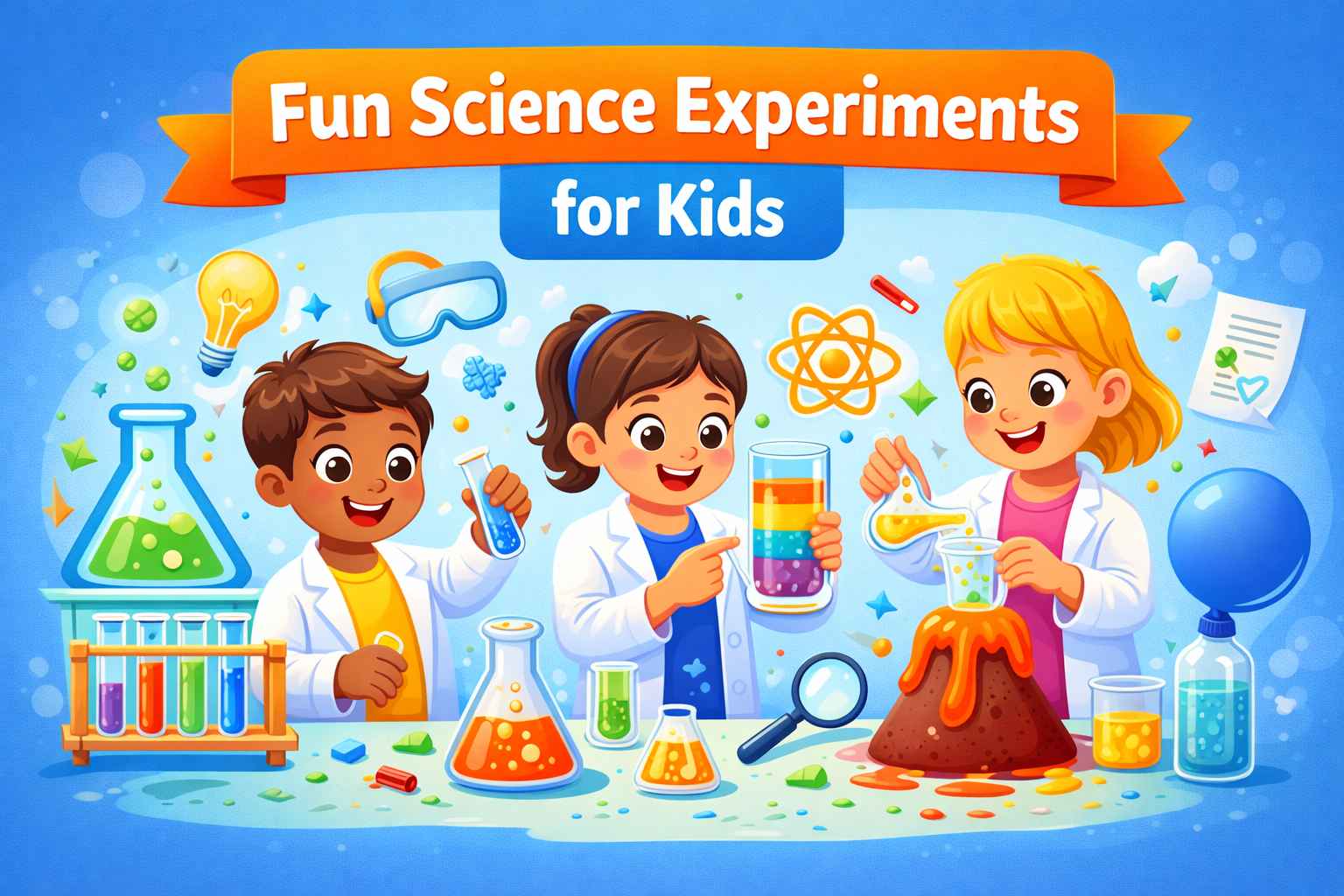
Science becomes exciting when kids can see, touch, and explore it themselves. At FunKidsLab, we believe the best way to learn science is by doing simple experiments that are safe, fun, and easy to understand.
Below are some fun science experiments for kids that can be done at home using common materials. These experiments help children understand basic scientific concepts while enjoying the process of discovery.
⚠️ Adult supervision is recommended for all experiments.
🔍 1. Rainbow in a Glass
What You Need:
- Sugar
- Water
- Food colors
- 4 clear glasses
- Spoon
Steps:
- Fill each glass with the same amount of water.
- Add different amounts of sugar to each glass (1 spoon, 2 spoons, 3 spoons…).
- Stir until the sugar dissolves.
- Add a different food color to each glass.
- Slowly pour the colored liquids into one tall glass.
What Happens?
The colors stack on top of each other instead of mixing.
Science Behind It:
Water with more sugar is denser, so it stays at the bottom. This teaches kids about density.
🌋 2. Volcano Eruption (Classic & Fun)
What You Need:
- Baking soda
- Vinegar
- Food color
- Small container
Steps:
- Put baking soda into the container.
- Add a few drops of food color.
- Pour vinegar slowly and watch!
What Happens?
The mixture bubbles and erupts like a volcano.
Science Behind It:
This happens because of a chemical reaction that creates carbon dioxide gas.
🧲 3. Magic Magnet Experiment
What You Need:
- Magnet
- Paper clips
- Plastic cup
Steps:
- Place paper clips on a table.
- Bring the magnet close without touching them.
- Watch the clips move toward the magnet.
Science Behind It:
Magnets attract objects made of iron. This experiment introduces kids to magnetism.
💧 4. Walking Water Experiment
What You Need:
- 3 glasses
- Water
- Food colors
- Paper towels
Steps:
- Fill two glasses with colored water.
- Place an empty glass between them.
- Fold paper towels and place one end in each glass.
- Wait and watch.
What Happens?
Water slowly moves into the empty glass.
Science Behind It:
This shows capillary action, how water can move through small spaces.
🌬️ 5. Balloon That Inflates Itself
What You Need:
- Balloon
- Baking soda
- Vinegar
- Empty bottle
Steps:
- Pour vinegar into the bottle.
- Put baking soda inside the balloon.
- Fix the balloon on the bottle mouth.
- Lift the balloon so baking soda falls in.
What Happens?
The balloon inflates by itself.
Science Behind It:
Gas produced by a chemical reaction fills the balloon.
🧠 Why Science Experiments Are Important for Kids
- Improve curiosity
- Build problem-solving skills
- Encourage observation
- Make learning enjoyable
- Boost confidence in science
👨👩👧 Safety Tips for Parents
- Always supervise children
- Use safe, household materials
- Avoid tasting any experiment materials
- Explain the experiment in simple words
❓ Frequently Asked Questions
Q1. Are these experiments safe for kids?
Yes, all experiments use common household items and are safe with adult supervision.
Q2. What age group are these experiments for?
These experiments are suitable for children aged 6 to 12 years.
Q3. Can these experiments be used for school projects?
Yes, they are great for school science projects and demonstrations.
🎉 Final Thoughts
Science doesn’t have to be boring. With simple experiments like these, kids can learn important concepts while having fun. Try these activities at home and encourage your child to ask questions and explore more.
👉 Explore more fun learning activities at FunKidsLab!

2 Comments